For over 70 years, doctors have relied on a drug called 6-thioguanine (6-TG) to treat leukemia. It’s a staple in medicine, but experts have long been lowkey confused about the molecular details that determine why the drug wipes out some cancer cells while leaving others totally unfazed. Now, a squad of researchers from CeMM, the University of Oxford, the Weizmann Institute of Science, and the University of Dundee has finally caught a lead: an unexpected protein called NUDT5.
The plot thickens
Usually, scientists assume that if a drug interacts with an enzyme, it's because it's blocking that enzyme's chemical reactions. The team expected NUDT5 to work the same way. But when they blocked the enzyme’s activity, it basically did nothing. Real talk: the enzyme’s actual chemical job wasn't the issue at all. Instead, it turns out that NUDT5 acts as a "molecular scaffold" that helps organize how the cell functions internally.
A new way to see
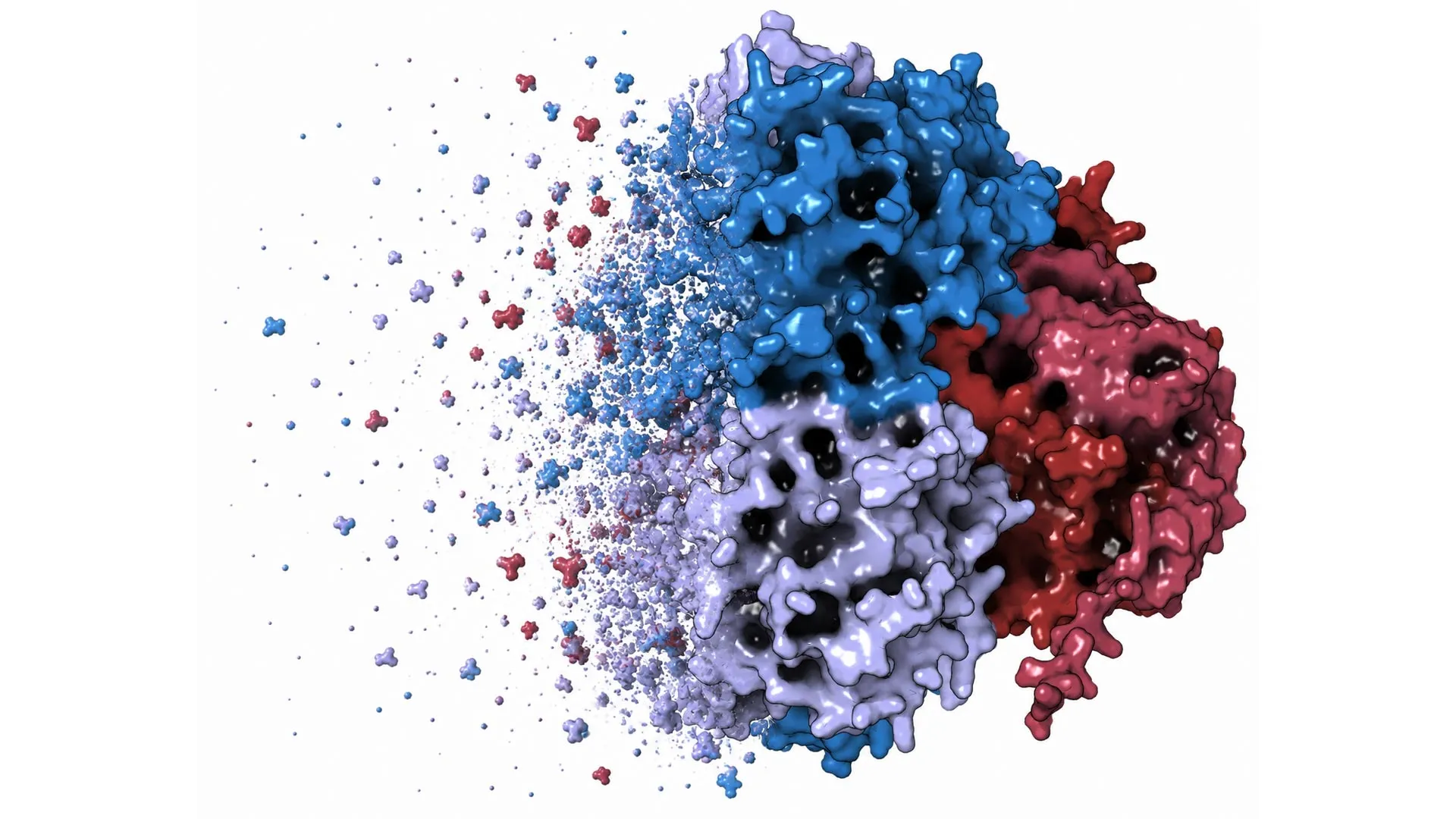
The researchers used a cutting-edge method called "targeted protein degradation." Instead of just blocking the enzyme, this technique deletes the protein entirely from the cell. They developed a tool called dNUDT5 to get the job done. When the protein was totally removed, the cells became resistant to the toxic effects of 6-TG. It was a massive W for the team, as it allowed them to separate the protein's job as an enzyme from its job as a physical presence in the cell. They even found a connection between NUDT5 and another protein, NUDT15; while NUDT15 makes cells more sensitive to the drug, reducing NUDT5 makes them more resistant.
Why it matters
This isn't a new medical treatment just yet, but it’s huge for science. It proves that proteins have major jobs that exist totally outside of their enzymatic activity. By looking past traditional inhibitors, scientists have uncovered a "hidden layer" of biology that could explain why patients react differently to the same meds. It’s giving major breakthrough energy for future drug development.