The early universe is acting up
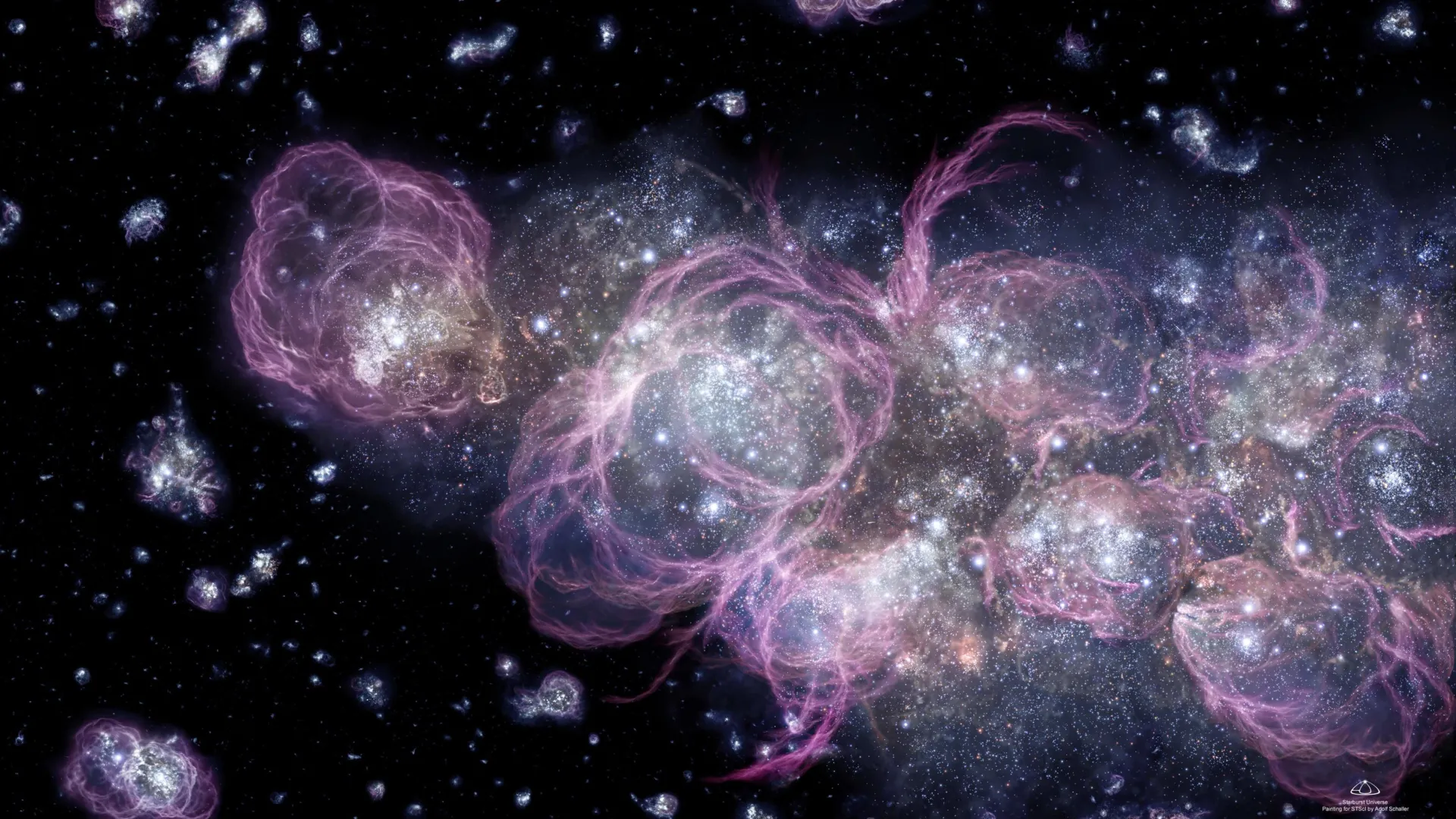
Ever feel like the physics of the universe is just giving 'I don't know her'? Astronomers are currently scratching their heads because the first generations of galaxies aren't following the rulebook we expected. A massive new survey, the Treasury of Extremely Metal-Poor O Stars (TEMPOS), just used the Hubble Space Telescope to figure out why.
Why massive stars matter
Stars at least 10 times the size of our sun are basically the main characters of a galaxy. They burn super hot and fast, eventually going out in a massive supernova explosion. By doing this, they dump energy and material into the surrounding space, which totally dictates how new stars form.
Lead author Grace Telford, an assistant professor of physics and astronomy at the University of Utah, notes that because these stars are so influential, they essentially 'govern the evolution of their host galaxies.'
The 'metal' mystery
Here’s the tea: scientists use the term 'metallicity' to describe elements heavier than hydrogen and helium. The earliest galaxies had way fewer of these metals than we see in the Milky Way today. Since modern models are based on our local neighborhood, they don't always track with the low-metallicity conditions of the ancient cosmos.
To study this, the TEMPOS team looked at 29 massive stars in six nearby dwarf galaxies that mimic the chemical makeup of the early universe.
The plot thickens
Studying these stars is a massive flex because it's incredibly expensive—each star requires up to 35 hours of Hubble time to observe. But the effort paid off. The team found a major surprise: while stellar wind speeds usually drop slowly as metallicity decreases, there’s a sharp, unexpected drop-off once you hit the lowest metallicity levels.
This is a huge deal because if these stars have weaker winds, they hold onto more mass throughout their lives, which completely changes how they evolve and eventually die. The team also managed to get a better look at how iron absorption works in these stars, proving that iron and oxygen levels don't always line up as researchers previously guessed.
Why it matters
Basically, the James Webb Space Telescope is finding galaxies that are 'weird' and unexpectedly complex for their age. By finally getting a large enough dataset to model how these massive, low-metal stars behave, scientists can stop guessing and start building models that actually make sense of the early universe. Real talk: we’re finally getting the receipts on how the universe was built.