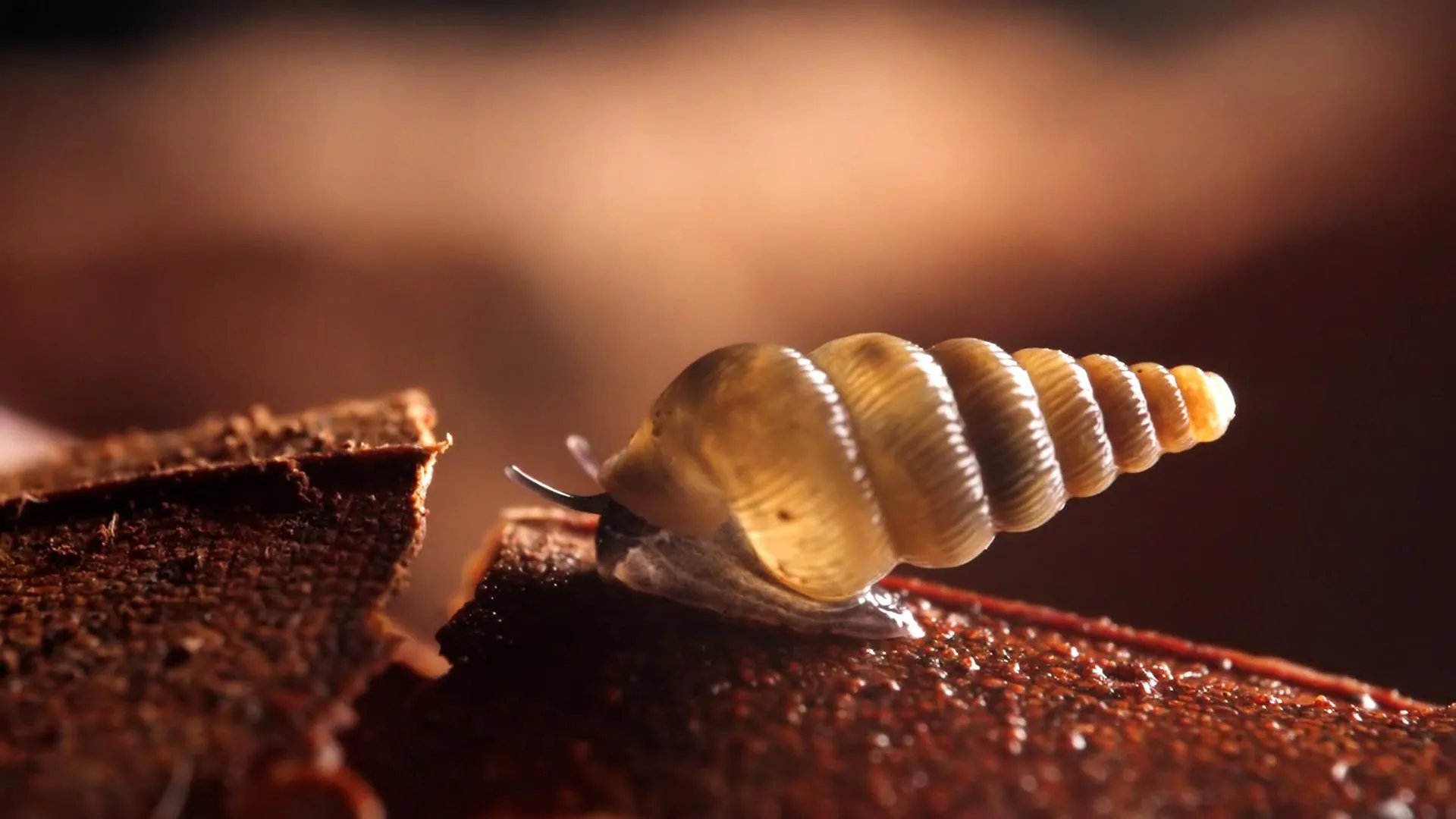
Meet the door-shutting snails
Scientists just leveled up our knowledge of European wildlife by identifying two brand-new snail species: Cochlostoma komarnica and Cochlostoma dobrido. While they don’t have catchy English common names yet, they are lowkey iconic. These tiny, cone-shaped snails are only about 6mm long and spend their time chilling on limestone rocks, snacking on algae and lichens.
What’s the plot twist? They have some super weird features. Unlike the snails you’re used to seeing in the garden, their eyes are on the sides of their heads rather than on stalks. Even cooler, they carry a circular disc on their tails that acts like a legit door. If they feel threatened, they retreat into their shells and lock themselves in. It’s giving main character energy.
Found by citizen scientists
These little guys weren’t discovered by some massive, faceless lab. They were found during expeditions led by Taxon Expeditions, a project where regular people—including students and citizen scientists—get to join real fieldwork. Between 2018 and 2025, teams were scouring the rugged mountains and canyons of Montenegro.
Musician Janine Buisman, who helped discover the species, said, “I was amazed that it is still possible to discover new animal species in Europe.” The researchers had to use field labs to dissect and genetically analyze the snails to prove they were actually unique.
The vibes are off for their habitat
There’s a catch, though: the Komarnica Canyon, where these snails live, is currently at risk. The area is being eyed for a massive hydropower dam project, which would flood the canyon and potentially wipe out biodiversity that we haven’t even fully documented yet.
Biologist Jovana Đokić from the Montenegrin Ecologists Society (MES) is not having it, arguing that destroying a unique ecosystem isn’t “green” energy. Conservationists are now working to get the canyon added to the UNESCO World Heritage list to save it from the dam. It’s a literal race against time to protect these newly discovered neighbors.
Why it matters
Discovering new species in a well-studied region like Europe shows us just how much of the natural world remains a mystery. The fight to protect Komarnica Canyon reminds us that when we prioritize infrastructure over wild spaces, we might be destroying creatures we haven't even met yet.