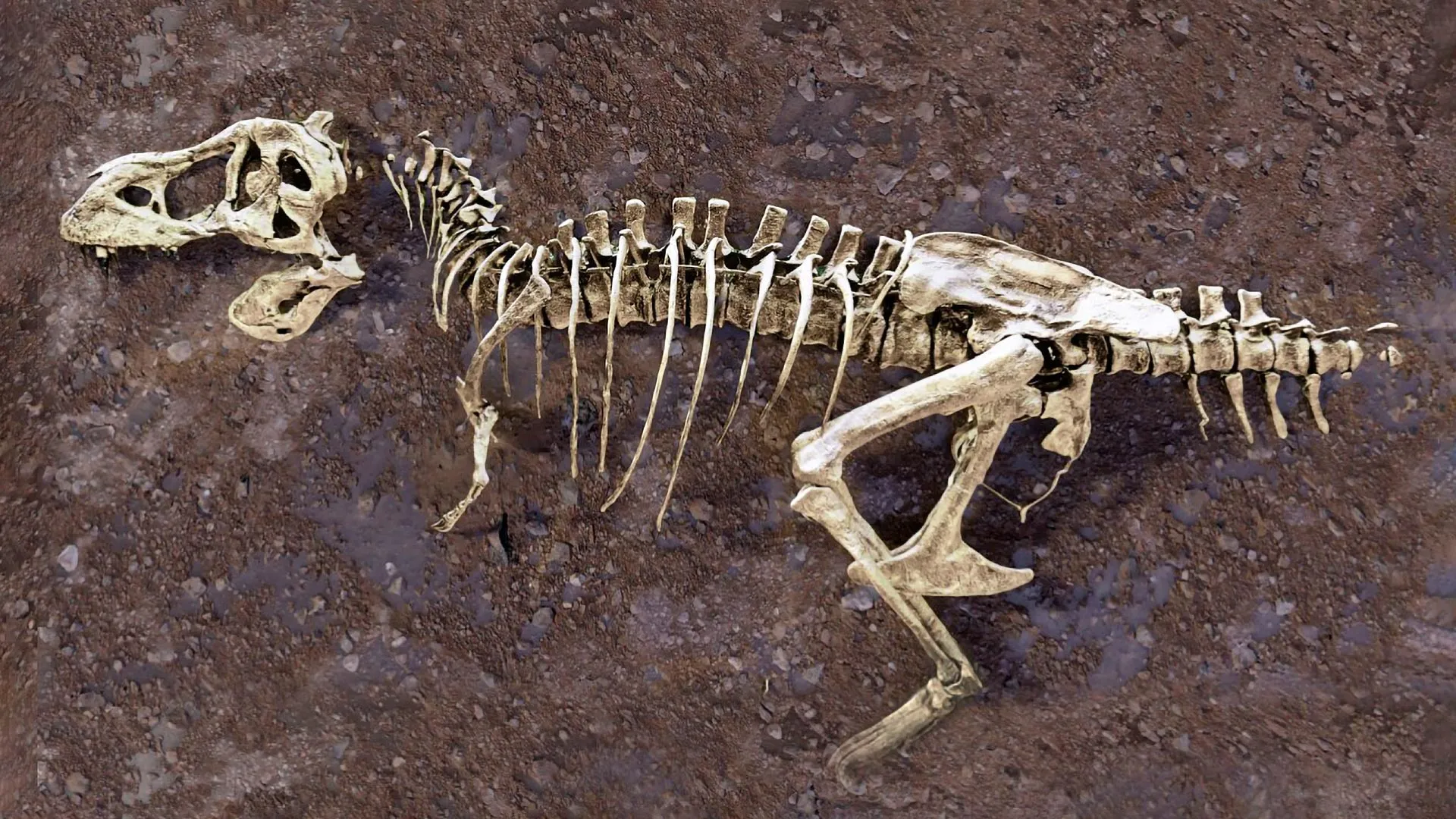
Real talk: sometimes a broken bone is more than just an ouchie—it's a goldmine of history. Scientists have been studying 'Scotty,' the biggest T. rex skeleton ever found, and they discovered something lowkey insane inside one of its ribs: proof that the dinosaur was actively healing from a massive injury right before it died 66 million years ago.
The inside scoop
Usually, soft tissue like blood vessels breaks down way before a fossil can form, making this find a total W for paleontologists. Because the dinosaur happened to die in a salty marsh that slowed down decomposition, those delicate structures stayed intact. Mauricio Barbi, a physics professor, called it 'like winning the lottery.'
To get a look at the goods without breaking the fossil, researchers at the Oak Ridge National Laboratory used neutron imaging. This high-tech scanning works like an MRI for fossils, letting them peek inside the bone without causing any damage. It’s giving 3D-mapping energy, allowing the team to see mineralized blood vessels that had never been spotted in a fossil before.
Why it matters
This discovery is a total game changer for understanding dinosaur biology. By mapping these vessels, scientists can literally see the healing process of an ancient predator in real-time. It’s proving that we don’t need to just guess about the past; by using advanced tech, we can uncover secrets that have been hiding in plain sight in museum collections for decades. Say less, science—we are obsessed.