The ultimate listening session
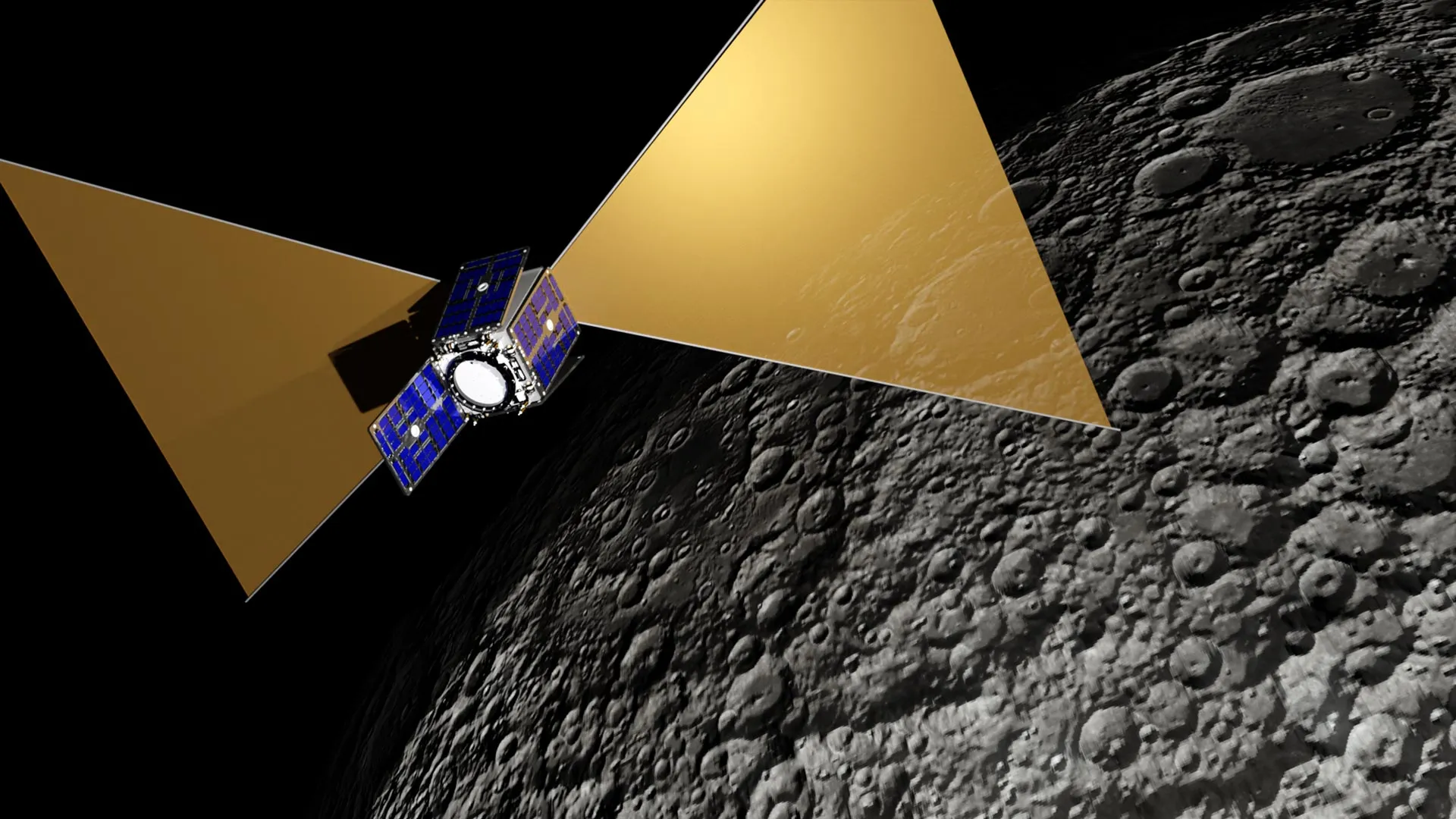
Ever wonder what the universe sounded like before stars even existed? Scientists are working on a plan to find out, and it’s giving major 'detective work' energy. A UK-led team from the University of Cambridge is developing a tiny satellite called CosmoCube, which is literally the size of a carry-on suitcase.
Its goal? To travel to the far side of the Moon. Why there? Because it’s the only place near us that’s actually quiet. Earth is lowkey noisy with FM radio, satellites, and telecommunications, and our atmosphere keeps certain signals from reaching us. The Moon’s far side blocks all that static for about 40 minutes every two hours, creating a perfect vacuum for listening.
Solving the mystery of the dark ages
CosmoCube is on the hunt for the '21-centimeter line'—a faint signal from hydrogen atoms that existed 13.5 billion years ago. This was a dark period in space before nuclear fusion ignited the very first stars. Real talk: we really don't know much about this era, but it's where the story of our universe basically begins.
By measuring these frequencies, the team hopes to learn how dark matter helped pull hydrogen together to form the first galaxies. It’s a huge W for science if they can pull it off without needing a massive, expensive spacecraft. The project, which is aiming for a launch within five years, plans to collect about 1,000 hours of data over a two-year mission.
How it works
Since the signal is incredibly faint, the tech has to be precise. The satellite uses a 'Dicke switched' calibrator to constantly monitor and remove its own electronic noise, so the team doesn't mistake their own hardware for a deep-space mystery. It’s a highkey complex design, but it shows that big discoveries don't always require massive budgets or giant rockets.
Why it matters
If successful, CosmoCube could unlock a window into the final unexplored frontier of our cosmic history. By understanding how the universe evolved from a dark, empty space into the stars and galaxies we see today, we’re one step closer to figuring out our origins. Plus, it’s a total game-changer for proving that we can do world-class space research with smaller, smarter, and cheaper platforms.