The Space Mystery
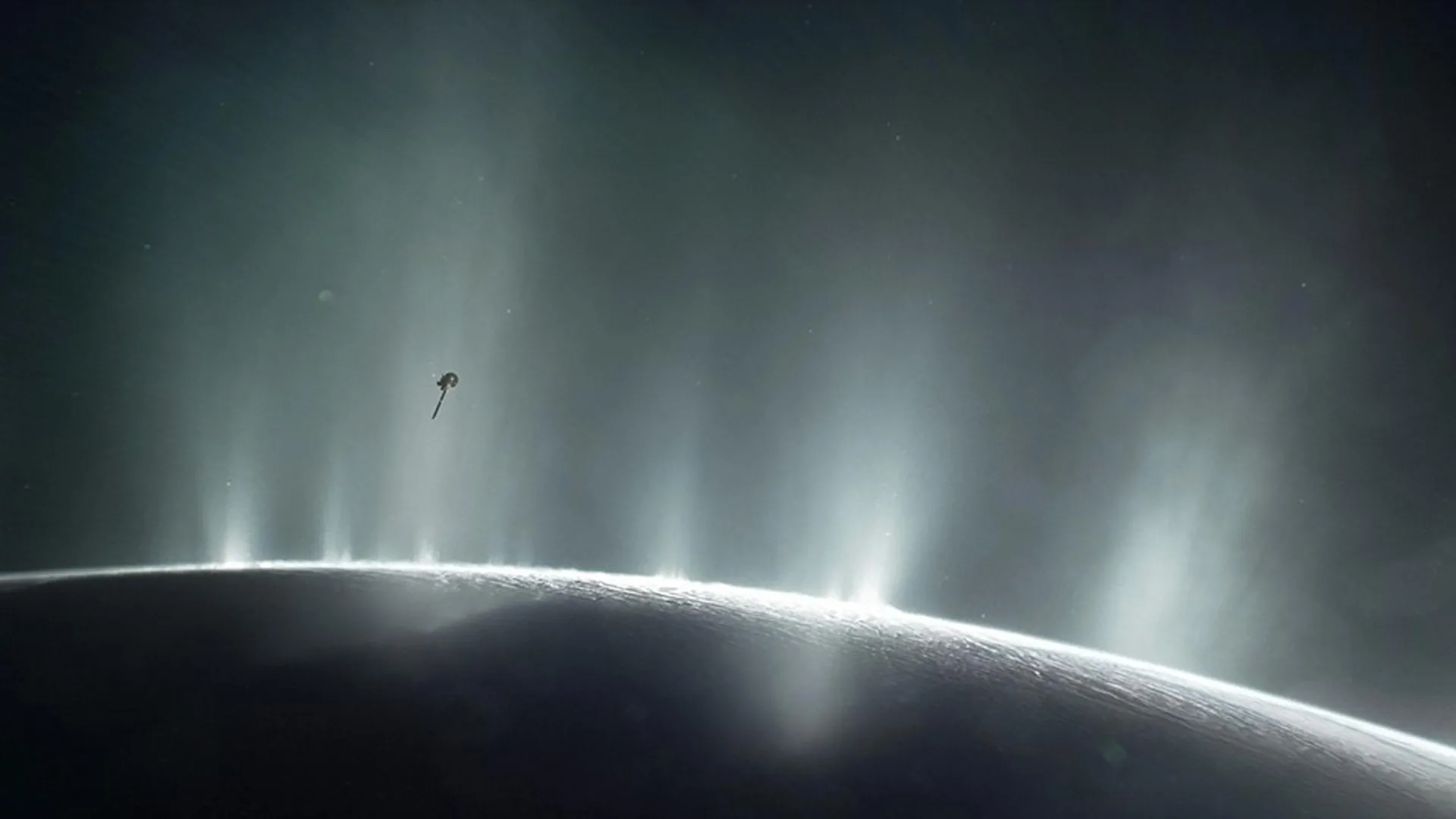
Saturn's moon Enceladus is covered in a thick shell of ice, but underneath it hides a massive, global ocean. Near its south pole, massive fractures in the crust shoot water vapor and ice particles straight into space. For years, scientists have used these plumes to study the alien ocean without having to drill through miles of frozen crust.
Between 2004 and 2017, NASA’s Cassini spacecraft analyzed 961 salt-rich ice grains erupting from the moon. You’d think all the grains would look the same since they come from the same ocean, but the data was actually wild. Some were packed with sodium chloride, while others held carbonates or phosphates. The plot thickens: chloride and carbonate almost never showed up in the same particle. It’s giving inconsistent, and researchers were lowkey confused.
The Lab Hack
A team led by researchers from the Earth-Life Science Institute (ELSI) at the Institute of Science Tokyo decided to recreate this in the lab. They froze droplets of 'ocean water' at different speeds. Turns out, the speed of freezing is the main character here. When droplets freeze slowly, different salts separate into their own little pockets. If those frozen droplets shatter later, each fragment ends up with a totally unique chemical makeup.
This means the spray leaving Enceladus isn't just instantaneous slush. The droplets probably move slowly through the moon's vents, freezing gradually. By the time they hit the surface, they're frozen solids that slam against the vent walls and shatter into the tiny, diverse grains Cassini detected. It’s essentially a natural, high-tech sample preparation process.
Why it matters
This is a major W for finding life. Because these ice grains naturally separate and concentrate specific chemicals—including organic compounds—it makes finding signs of potential life way easier. If molecules that are usually super diluted in the ocean get packed into these grains, future space missions won't have to work as hard to detect them. We basically have an alien moon doing the heavy lifting for us, no cap.