The ultimate space countdown
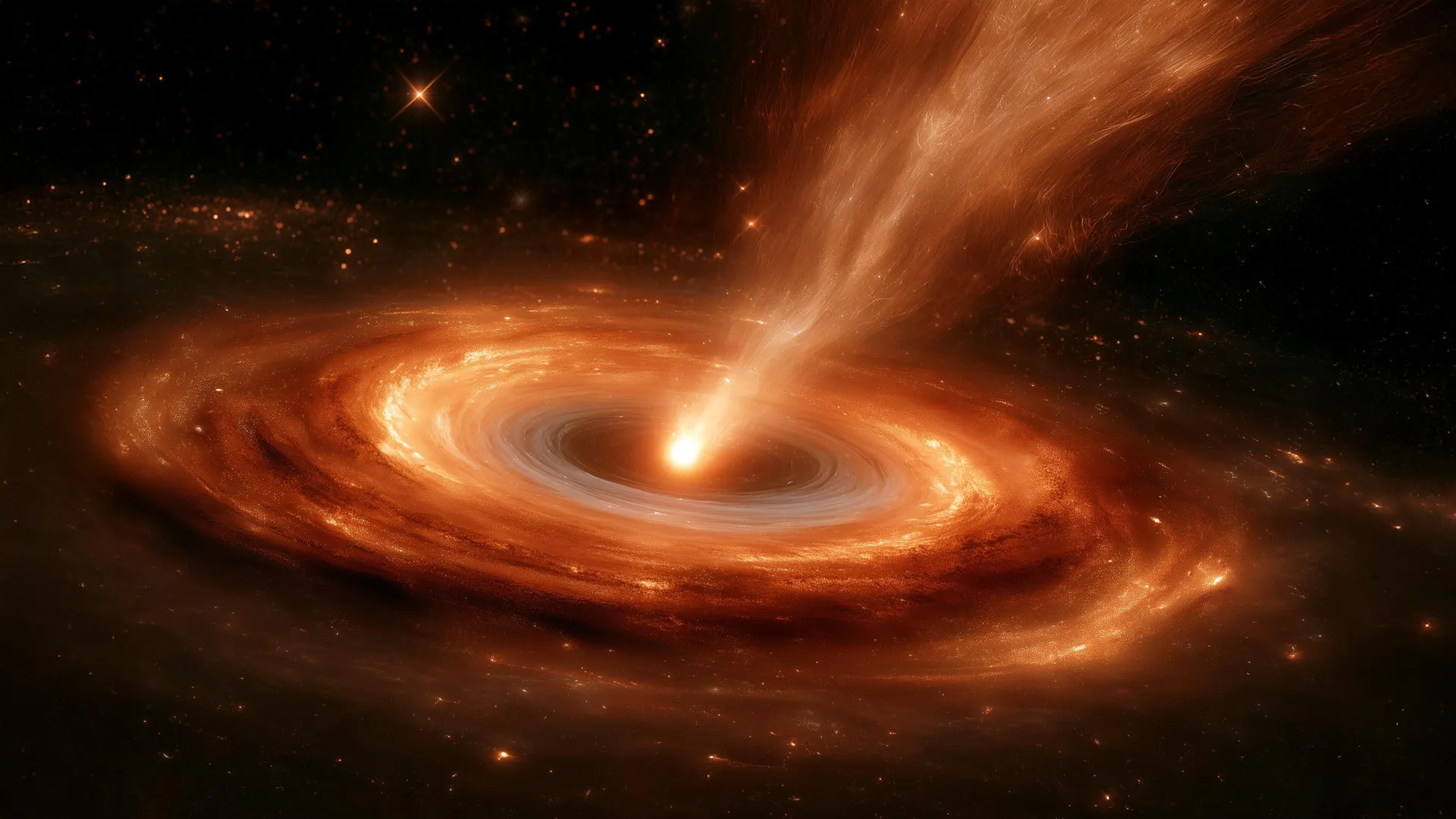
Ever wonder how gas giants like Jupiter get so massive? It turns out they’re playing a high-stakes game of beat-the-clock. New research from NASA’s James Webb Space Telescope (JWST) has given us the most detailed look yet at how protoplanetary disks—the gas-and-dust clouds that birthed our solar system—actually lose their gas over time.
Astronomers led by Naman Bajaj from the University of Arizona studied 72 young, Sun-like stars. They found that planet formation is lowkey a race against time. Because this gas is only temporary, planets have to hurry up and absorb it before it gets blown away into space.
How the gas disappears
The study found that stars don’t just dump their gas all at once; they use different mechanisms as they mature.
- Early stage: Young systems use powerful, magnetic-driven jets and winds to clear out material. These act like a cosmic vacuum, pulling gas away from the center.
- Later stage: As the star ages, the jets fade, and a process called "photoevaporation" takes over. The young star’s own radiation heats up the remaining gas until it literally evaporates into space.
"Planet formation is therefore a race against time," Bajaj said. If the disk clears out too quickly, developing planets simply don’t have enough material left to build the massive, gassy atmospheres that define giants like Jupiter or Saturn.
What's next?
This isn't just cool trivia—it’s changing how we understand the history of our own neighborhood. The team was able to map this process by looking at 72 systems at different stages of life, effectively creating a time-lapse of how solar systems evolve. The next big move for researchers? They want to figure out exactly how much gas is being lost and where it’s coming from, which could help us predict which parts of a star’s disk are most likely to grow new worlds before the clock runs out.
Why it matters
Understanding how stars shed their gas helps us solve the mystery of why some solar systems end up with gas giants and others don't. By timing this process, scientists can better predict the "habitability window" for planets across the galaxy. It’s giving us a front-row seat to the literal creation of solar systems, and honestly? The vibes are immaculate.