The ultimate space scavenger hunt
Ever heard of a "stellar stream"? It’s basically a long, narrow ribbon of stars that gets pulled away from a dense cluster by gravity—a process scientists call "tidal stripping." These streams have been spotted in our own Milky Way before, but for the first time ever, a team led by PhD student Julie Kiel Holm and Associate Professor Sarah Pearson has caught one in a totally different galaxy.
Why it's a big deal
Real talk: this is highkey massive for astronomy. These streams act like tracers for dark matter. Since dark matter makes up about 80–85% of all matter in the universe but is totally invisible, we’ve been struggling to figure out how it’s distributed. Because these stars move in response to gravity, tracking their stream lets scientists map out where that invisible mass is hanging out.
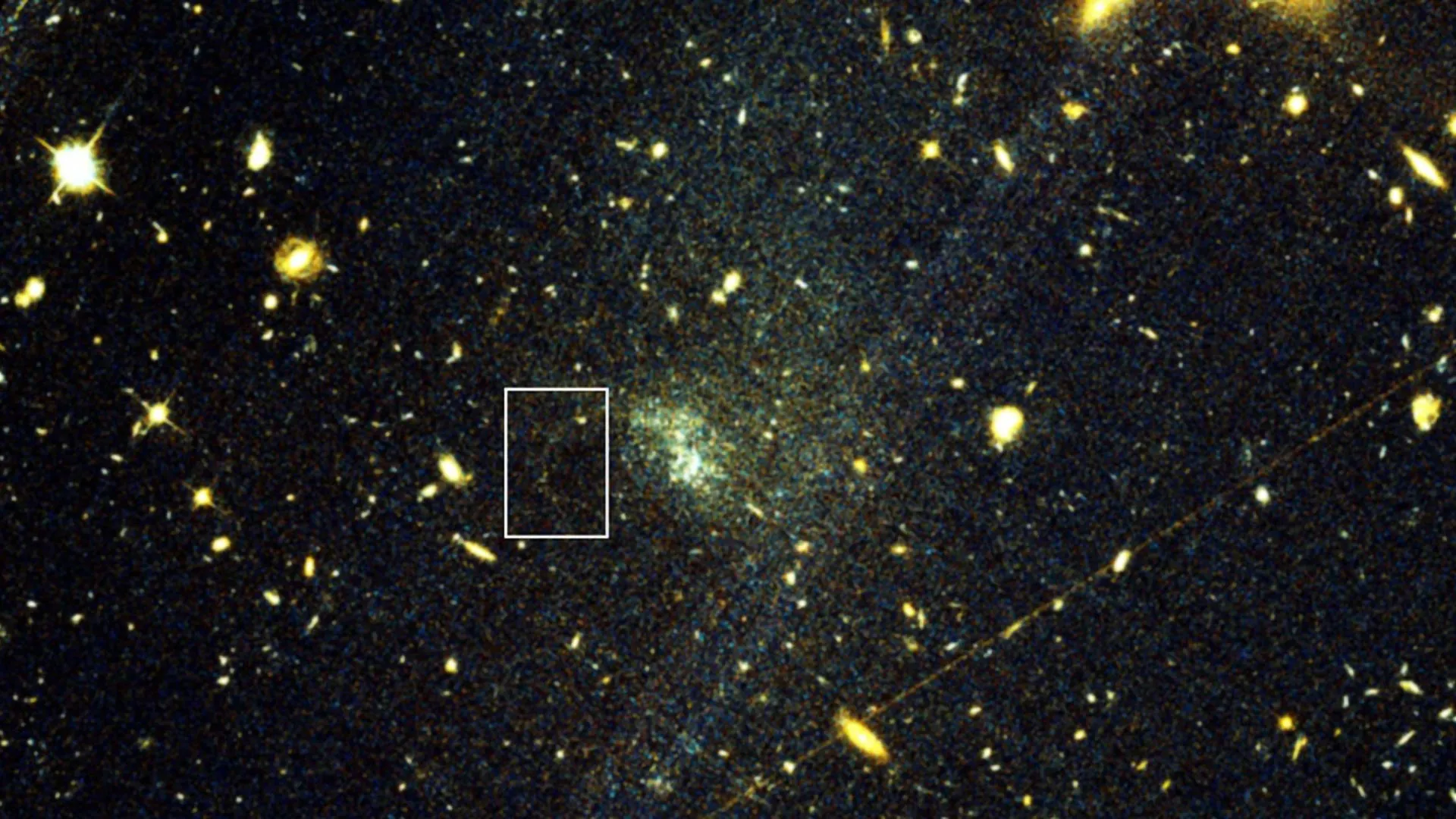
The team zoomed in on an "ultra-diffuse" galaxy called UGC9050-Dw1—which is basically a galaxy that doesn't give off much light—and managed to spot the stream despite the signal being super weak. It’s giving main character energy because it proves that a tool we’ve only been able to use on our own galaxy can actually work on others, too.
What’s next?
This is just the start. As new observatories like the Euclid Space Telescope and the Nancy Grace Roman Space Telescope come online, experts expect to find way more of these streams. It’s a total W for science, as it gives us a new way to study the behavior of dark matter across all different types of galaxies.
Why it matters
We know dark matter exists, but we have no clue what it’s actually made of. By opening up a new way to measure it in galaxies far beyond our own, researchers are finally getting the receipts on how mass is distributed throughout the universe.