The deep-sea danger you didn't know existed
Real talk: when you think of volcanic hazards, you’re probably picturing lava flows or pyroclastic clouds like some 90s disaster movie. But turns out, the real main character energy in volcanic destruction is often the tsunami. Back in 1883, the Krakatau eruption killed over 30,000 people—and most of that was because of a tsunami, not just the molten rock.
Scientists have long known that deep-ocean eruptions are usually 'meh' because high water pressure keeps them in check. But when a volcano is closer to the surface, the water pressure drops and the heat spikes, turning the ocean into a literal pressure cooker. The problem? We lowkey have no clue which underwater volcanoes are about to pop, or what specifically triggers a massive wave.
The Hunga breakdown
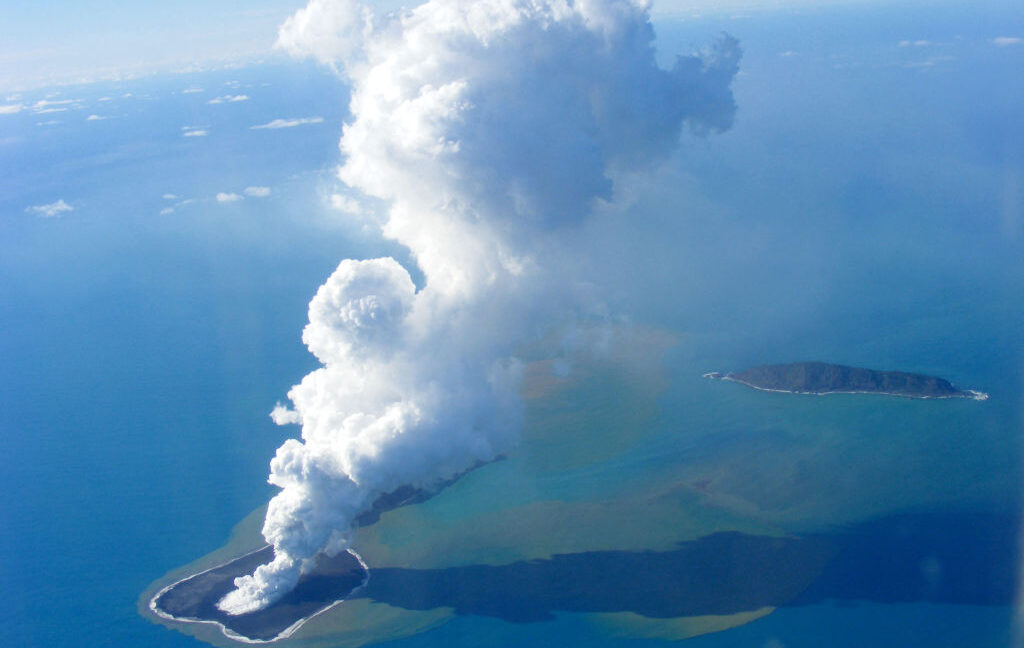
To get the tea, an international team of researchers looked at the 2022 Hunga eruption in Tonga. This event was absolutely cracked—the eruption column hit over 55 km into the stratosphere, and the pressure wave was detected globally. The tsunami it caused hit 40-meter heights, which is highkey the record for an underwater volcanic eruption.
Here is where it gets nerdy: the Hunga caldera is actually tiny. It’s only about 4 km wide, making it one of the smallest of the 177 known calderas in the world. But it was unusually deep. When the volcano erupted, the ground above the magma chamber gave out, and the whole thing sank by about a kilometer. Think of it like a 'piston-style collapse'—the seafloor dropped like a piston in a cylinder, displacing a massive amount of water in an instant. That rapid movement is exactly what sends a wall of water toward the coastline.
Why it matters
This is a massive W for science because it shows that you don't need a super-volcano to get a super-tsunami. If the conditions are right—like a thin, broad reservoir roof that collapses at high speed—a 'small' volcano can be just as dangerous as the giants.
The plot thickens because the Tonga-Kermadec arc is hiding at least 74 underwater volcanoes, and 20 of them are these caldera complexes. Most of them are totally unmapped or just have low-res data. Without baseline mapping, we’re basically flying blind. Researchers are now calling for better seafloor monitoring, because if we don't start tracking these 'hidden' craters, we're going to be caught totally off-guard when the next one decides to go nuclear.