The plot thickens in deep space
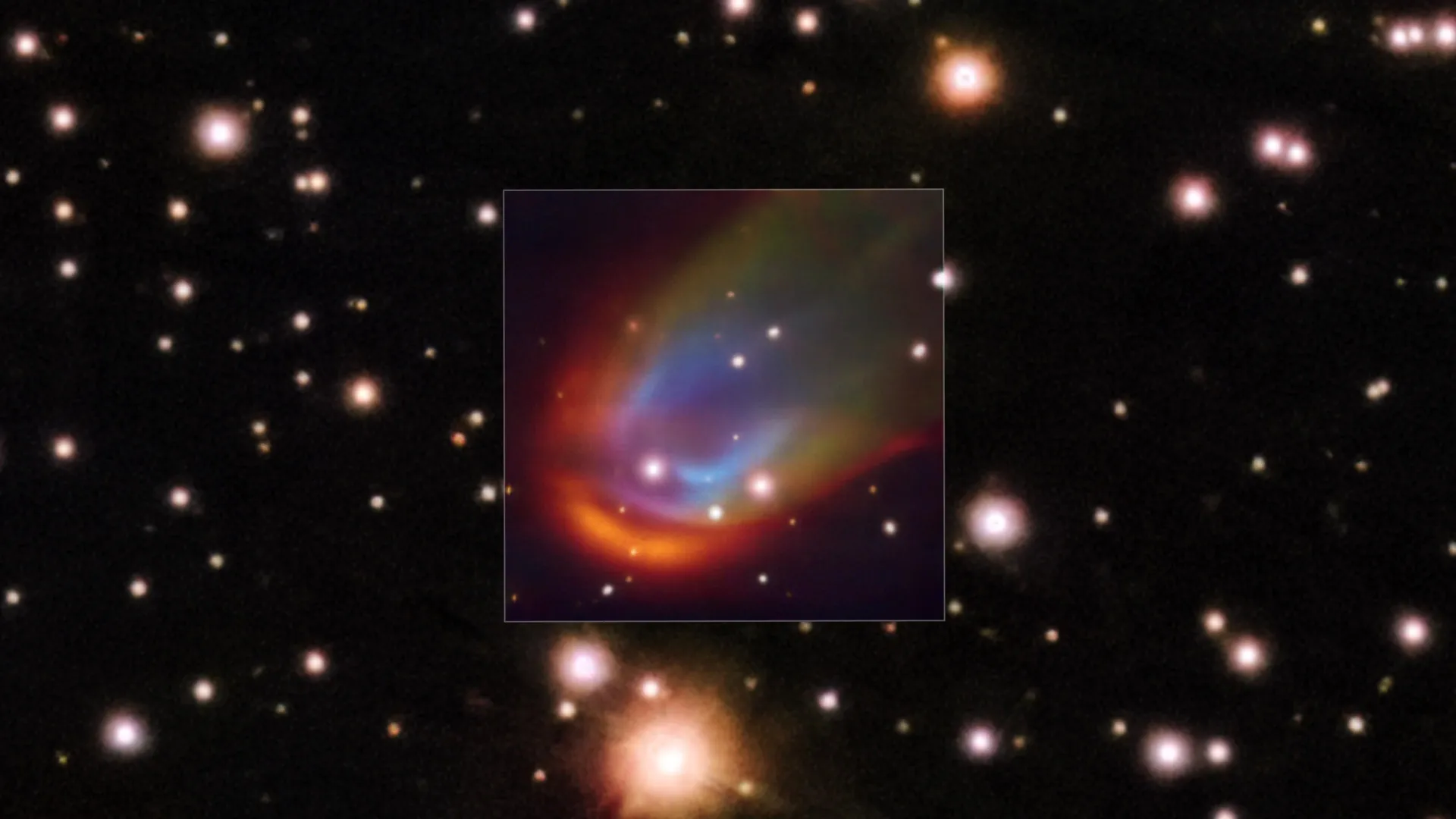
Ever seen a boat cruise through the water and leave a curved wake behind it? Space has that, too. When stars move through the cosmos, they often collide with interstellar gas and dust, creating what astronomers call a "bow shock." It’s usually pretty straightforward, but researchers just spotted something totally wild that’s lowkey breaking the rules of physics.
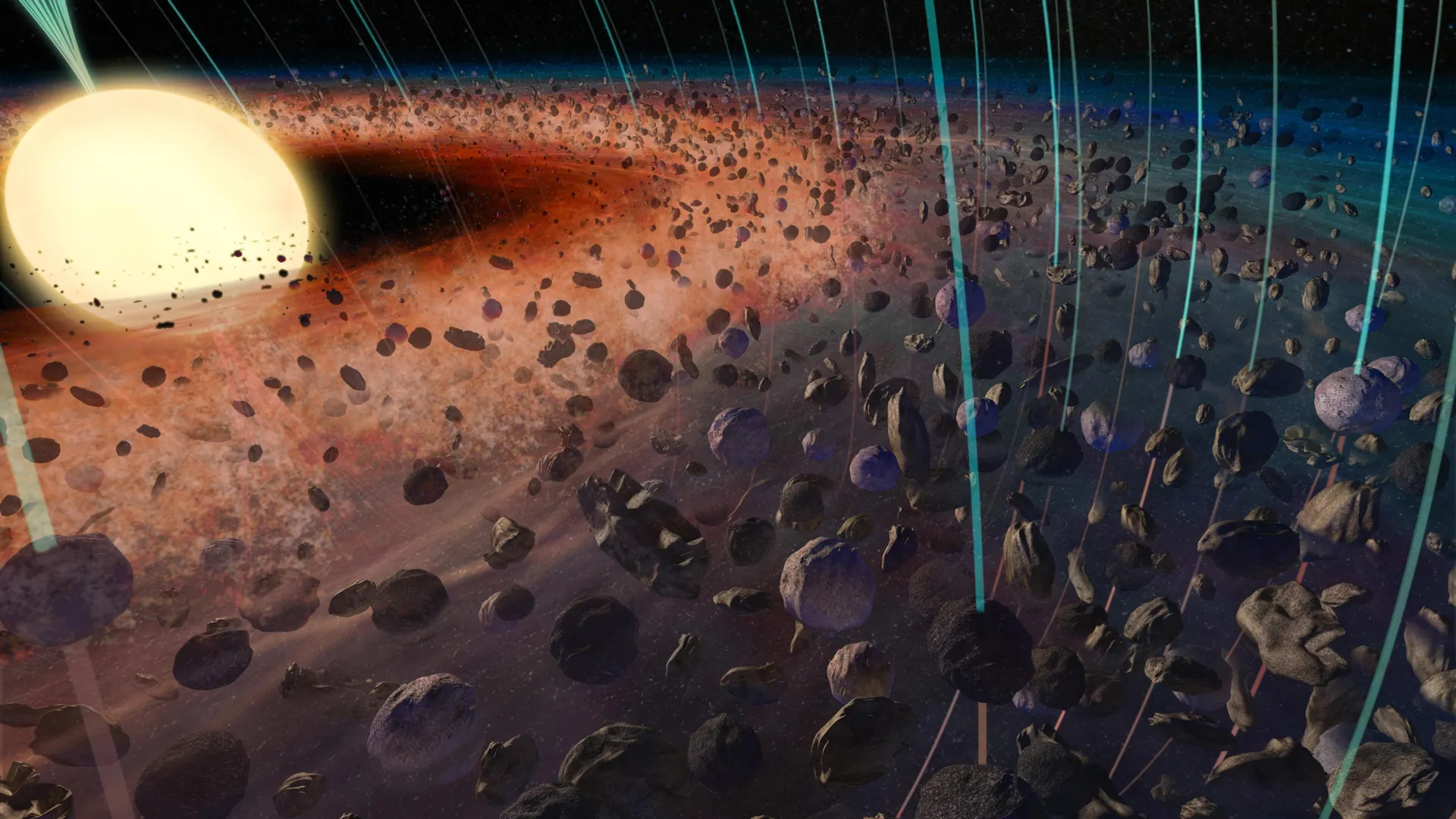
Astronomers using the European Southern Observatory’s Very Large Telescope (VLT) caught a dead star, known as RXJ0528+2838, creating a massive shock wave that shouldn't exist. Located about 730 light-years away, this star is a white dwarf—the leftover core of a dead star—with a Sun-like companion nearby.
Why it's a big deal
Normally, when a white dwarf has a neighbor, it pulls gas away from that companion to form a disc, which eventually spits out matter in an "outflow." But RXJ0528+2838 doesn't have that disc.
"We found something never seen before and, more importantly, entirely unexpected," says Simone Scaringi, associate professor at Durham University. Without a disc to feed the energy, there’s no known mechanism for the star to create such a powerful outflow. The structure is huge, suggesting the star has been doing this for at least 1,000 years. It’s giving major mystery energy, and the team is currently calling it a "mystery engine."
The magnetic mystery
The star has a super strong magnetic field, which seems to guide matter directly onto the white dwarf instead of letting it form a disc. While that explains the matter flow, it doesn't explain the power source. The team’s current math says the magnetic field could only keep this going for a few hundred years, but the shock wave has been there for at least a millennium. It’s an L for current scientific theories, for sure.
Why it matters
This discovery is a total vibe check for our understanding of how dead stars interact with their environments. Because the current explanation doesn't add up, scientists are looking to the upcoming Extremely Large Telescope (ELT) to help them find more of these systems and finally figure out what’s powering this cosmic anomaly. Say less—we can't wait to see what they find.