The plot thickens in the aftermath of the massive Bitget heist. Following Thursday’s $351.6 million drain, Circle and Tether have officially moved to freeze assets in one specific wallet linked to the exploit. The bad news? It’s only a drop in the ocean. According to on-chain data, Circle blacklisted the address—labeled "Bitget Exploiter 8"—early Friday morning, followed by a similar ban from Tether. While this stops roughly $318,000 in stablecoins from moving, it’s a tiny fraction of the total haul. The security firm MistTrack notes that other wallets tied to the attacker are still holding over 63,000 ETH, which, since they aren't stablecoins, are currently impossible for any centralized issuer to freeze. ## How did this happen? Bitget CEO Gracy Chen confirmed that the hack wasn’t a standard private key compromise. Instead, the attackers managed to spoof transaction data and trick the exchange's backend wallet infrastructure into triggering an authorization process that authorized the outgoing transfers. Chen noted that Bitget’s user protection fund—which sits at over $464 million—is sufficient to cover the losses. This quick response from Circle is being eyed closely by the community, especially since critics like ZachXBT previously called out the firm for its slower reaction during the $285 million Drift hack earlier this year. As always, keep your bags safe and remember that even centralized entities have limits on how much they can recover in the wild west of DeFi. Stay vigilant—this is not financial advice. ## Why it matters While recovering even a fraction of the stolen funds is a W, the exploit highlights how vulnerable exchange infrastructure remains and why self-custody or high-security practices are the only way to truly sleep at night.
Bitget hack: Circle and Tether freeze small portion of stolen funds
After a massive $351.6 million exploit, crypto giants have blacklisted a wallet, but the bulk of the stolen assets remain untouchable.
PART OF A LARGER STORY
25 related articles
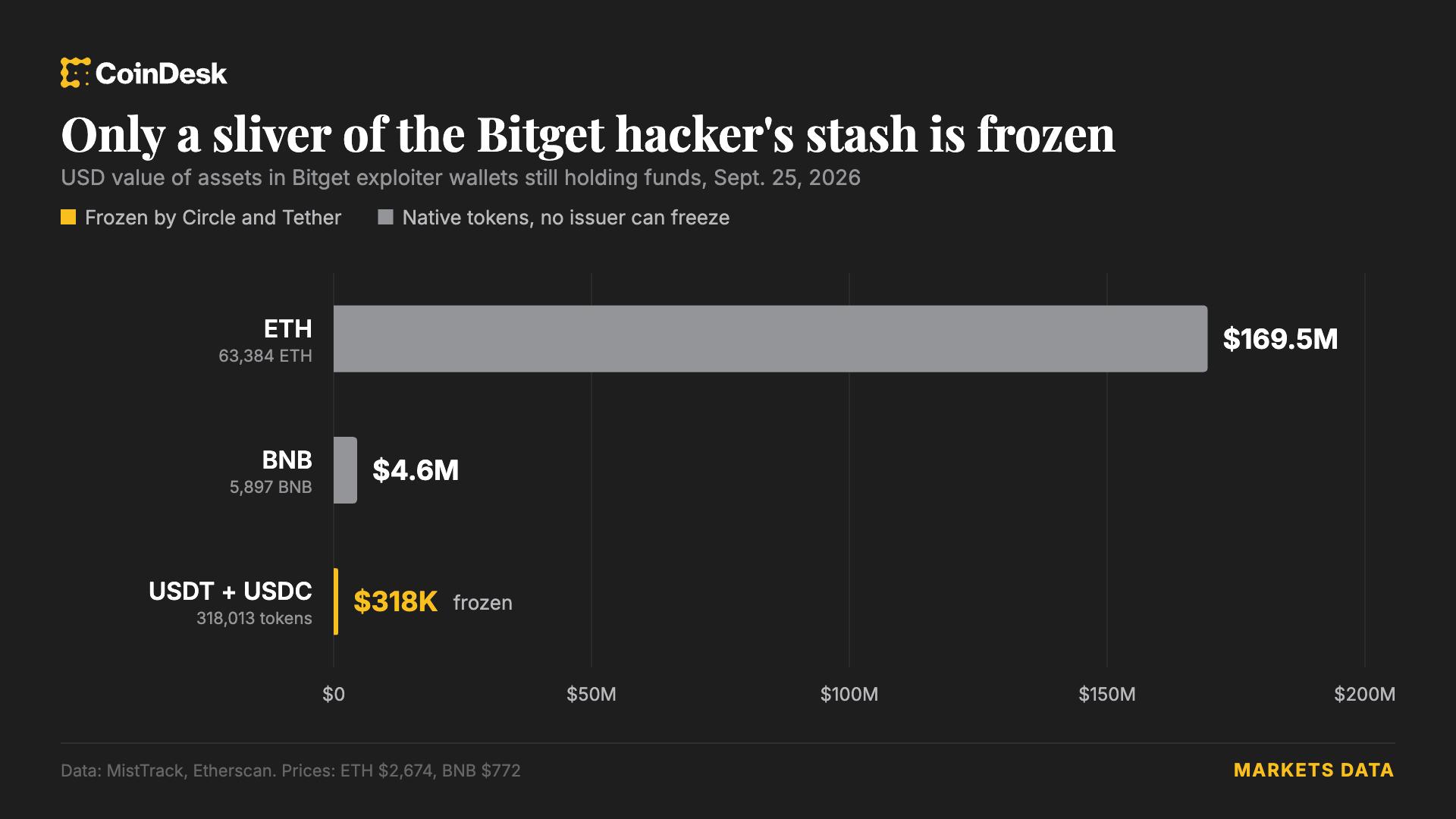
Source: CoinDesk ↗ · Rewritten with the help of AI — check the source for important details.
How do you feel about this?
Log in to react
Test yourself
3 quick questions about this story
Comments
(0)No comments yet — be the first.
Similar articles you might enjoy

Bitget hack: CEO points to North Korea after $352 million drain
The exchange is currently working to recover funds after investigators linked the massive exploit to familiar patterns seen in previous DPRK-linked attacks.

Bitget exchange hit by massive $352 million security breach
The exchange confirms unauthorized hot wallet transfers, but insists user funds remain safe behind a $464 million protection fund.

Crypto and Wall Street are officially entering their merger era
Traditional finance and the crypto ecosystem are colliding as major players race to tokenize everything from the NYSE to your local bank deposits.
Related Articles


Ask anything about this article