The Hunt for the Tiny
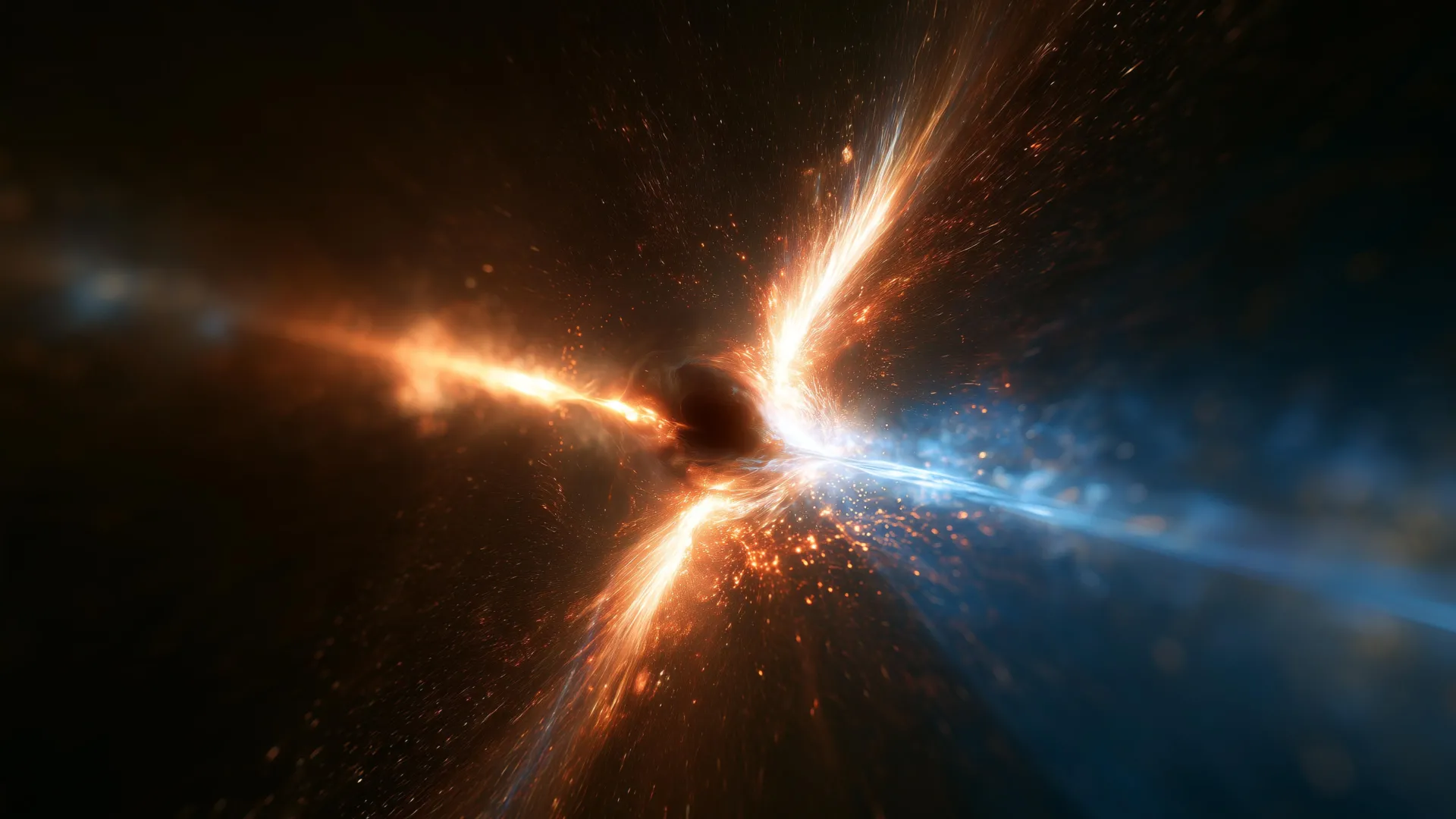
Ever wondered how the universe works at the smallest, most chaotic levels? Researchers at UC Santa Barbara are using the Large Hadron Collider (LHC) at CERN to hunt for quantum black holes. These wouldn't be the massive, star-eating voids you see in movies. Instead, these would be microscopic and would vanish almost instantly if they ever popped into existence.
While the team didn't actually find any, don't L your excitement. In the world of high-stakes physics, a "null result" is still a major W. By confirming where these black holes aren't, scientists can cross possibilities off their list and focus on where to look next. It’s all about narrowing down the search to solve the ultimate physics mystery: how to bridge the gap between quantum mechanics (the tiny stuff) and general relativity (the massive stuff).
Why gravity is acting sus
There’s this annoying issue in physics called the hierarchy problem. Basically, gravity is lowkey way weaker than the other fundamental forces. Some theorists think gravity might be "leaking" into extra spatial dimensions that we can't see, which would mean it’s actually stronger than it looks. If those dimensions exist, the LHC’s high-energy proton collisions might have enough power to create tiny black holes.
Real talk: Are we safe?
Back when this idea first dropped, people were spiraling because they thought the LHC might create stable black holes that would eat the Earth. Spoiler: that was never the vibe. Experts have clarified that these quantum black holes would evaporate instantly. Plus, high-energy cosmic rays have been hitting our atmosphere at these same power levels for eons without causing any issues. It’s giving… totally harmless.
Why it matters
Physicists are currently trying to unify our understanding of nature into one "theory of everything." Finding a quantum black hole would have been the ultimate cheat code, because it’s the one thing that is both extremely small and extremely heavy. Even without a discovery today, every bit of data helps us map out the fundamental rules of the universe. The plot thickens, and science keeps pushing forward.