The deep-sea discovery
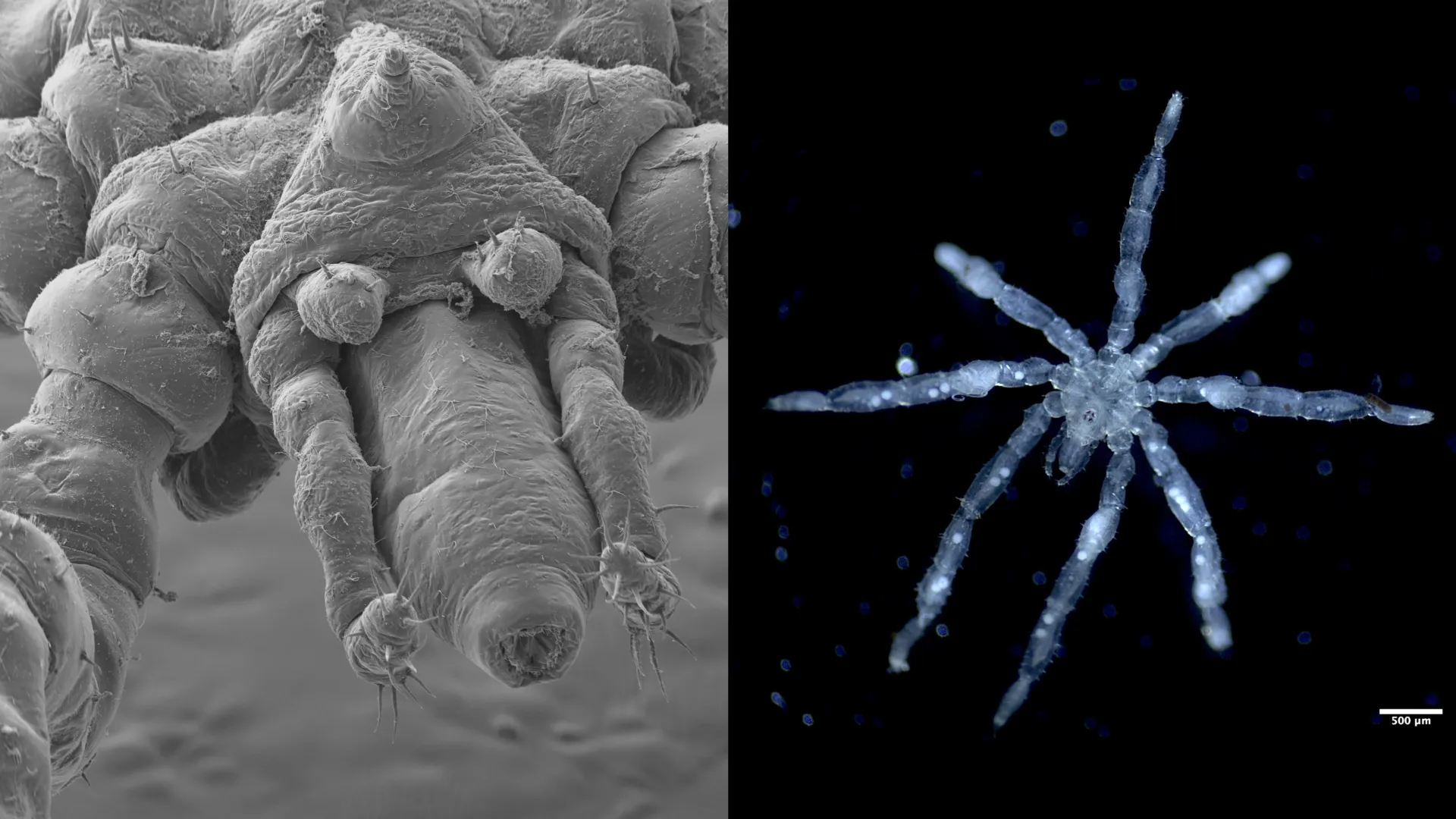
If the idea of tiny, hairy legs creeping up your leg while you’re swimming gives you the ick, I have some bad news. Researchers at the University of British Columbia just identified two new species of sea spider in the Salish Sea, and honestly? It’s giving horror movie energy. This is the first time in nearly 100 years that scientists have officially described new sea spider species in this region.
Meet the new species
The first, Callipallene pilosuspedes (literally Latin for "hairy feet"), is the main character of this nightmare. It’s got striking red eyes and a proboscis equipped with tiny claws to grab food. Its mouth is divided into three lips, which researchers say looks like a miniature, terrifying Sarlacc pit. It even uses specialized limbs to groom itself, which is lowkey impressive but highkey creepy.
Then there’s Tanystylum kiixin. This one is less of a neat freak than the first; because its egg-carrying limbs aren't as flexible, it often ends up covered in dirt and tiny parasites. Talk about an ecosystem within an ecosystem.
Why it matters
Real talk: why does this matter? Sea spiders are part of a 500-million-year-old lineage. They have some wild traits—like breathing through their skin and having males carry the eggs—but we actually know very little about them. Lead author Cormac Toler-Scott noted that because we lack basic info, it’s hard to track how climate change or human activity is affecting these marine invertebrates. By using DNA analysis and better imaging, the team is finally helping us understand what’s living in our backyard. The study suggests there are likely even more species out there waiting to be found—so maybe keep that in mind next time you hit the beach. Say less.