The historical context
For the Sami—Europe’s only recognized Indigenous people—the fight for recognition is anything but new. Johan Turi, a pioneer who became the first Sami author to document his culture in his own language, spent the early 20th century trying to educate the Swedish state. His 1910 book, Muitalus sámiid birra, was a desperate attempt to show the Swedish king the realities of life in northern Sweden, which was being rapidly transformed by mining, railways, and encroaching settlers. Turi believed that if the authorities only understood the difficulty of the Sami experience, things would change. Spoiler alert: they didn't really, but his work became a cultural touchstone.
The exhibit
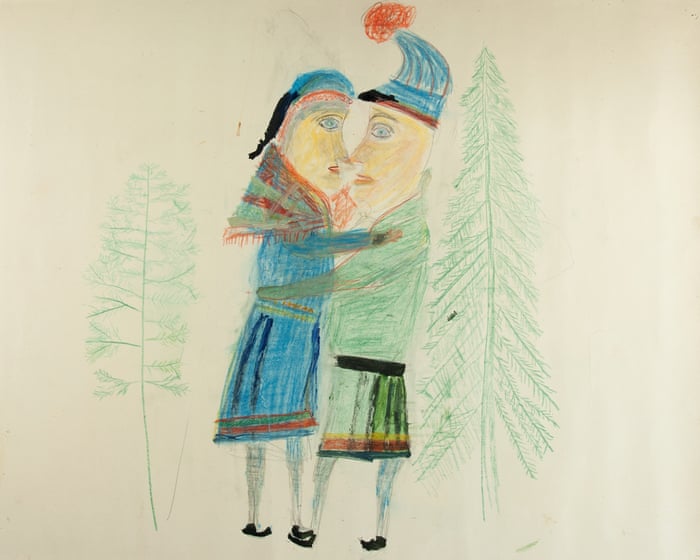
Now, for the first time in nearly a century, Turi’s original writings, drawings, and traditional Duodji handicrafts are back on display. The exhibition, titled On the Ugly and the Beautiful at the Kin Museum of Contemporary Art in Kiruna, honors his belief that all aspects of life deserve a spotlight. He is joined by contemporary artists Outi Pieski and Johanna Minde, who use the space to connect Turi’s history with modern Indigenous survival. For Pieski, the art isn't just a "view"; it’s about being an active part of the land's network. She even features the ládjogahpir, a traditional Sami woman’s hat that has evolved into a symbol of decolonial feminism.
Why it matters
This show isn't just for aesthetic vibes. It coincides with the official handover of an exhaustive report by the Truth Commission for the Sami People, documenting state-sanctioned abuses. The cold reality is that the issues Turi fought in 1910—industrial land grabs, mining, and discriminatory rhetoric—are still very much hitting home today. As the climate crisis intensifies in the Arctic, the pressure on reindeer herding and ancestral land is at an all-time high. It’s giving history repeating itself, and the Sami community is still waiting for the reconciliation they've been owed for generations. Real talk: ignoring a nation's history is just a classic colonial move.