Matter from thin air?
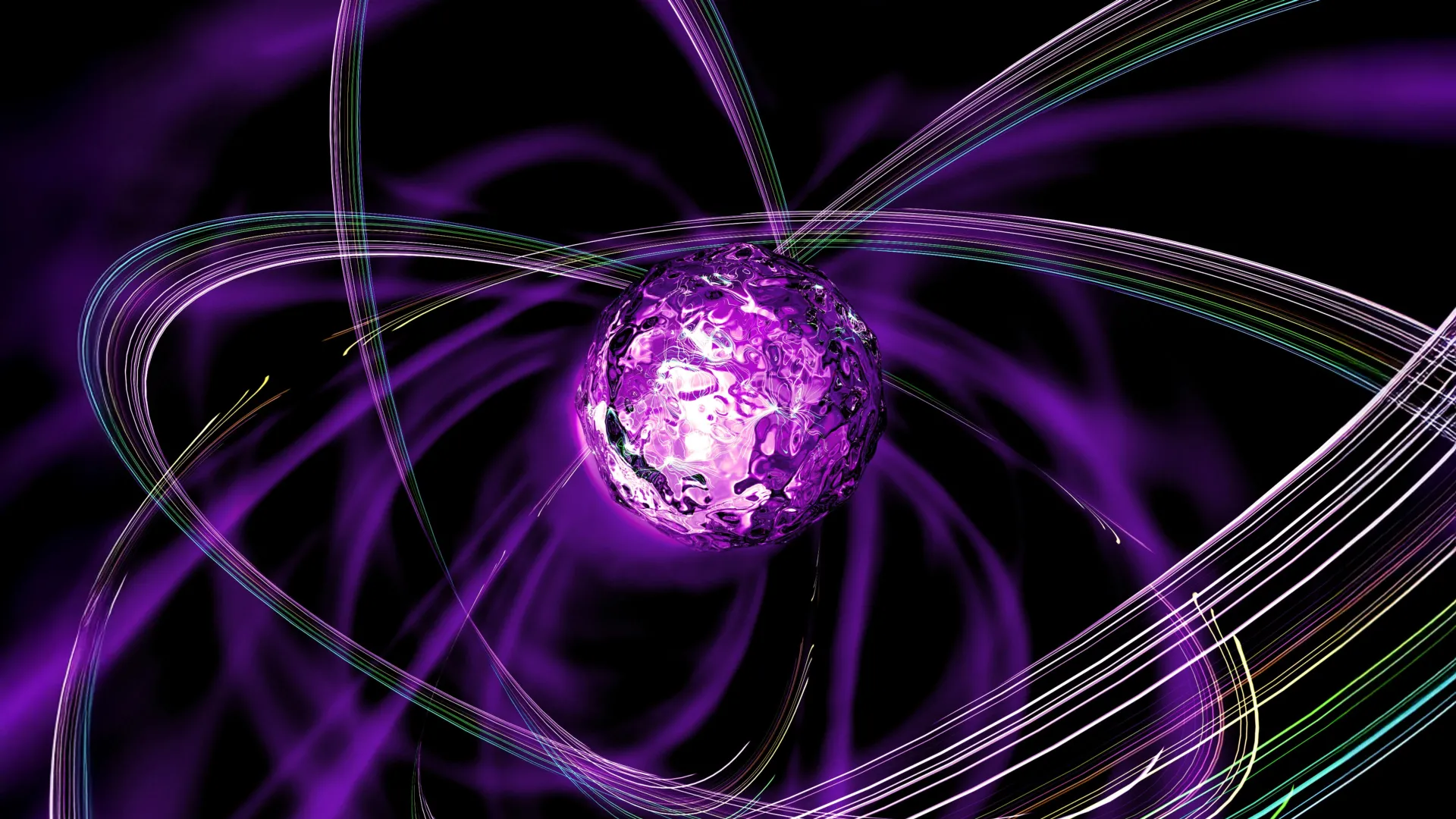
Real talk: have you ever wondered how the universe actually started? Scientists have lowkey been obsessed with how matter formed right after the Big Bang. Now, researchers led by the Duke Quantum Center (DQC) have achieved a massive W in quantum physics: they used a quantum computer to simulate 'string breaking' in a lab.
The science explained
Think of the building blocks of matter, like quarks, as two tiny charged particles connected by a super-stretched rubber band. If you pull them apart, the energy in that 'string' builds up. Eventually, that energy gets so intense that the string snaps, and—poof—new particles pop into existence. It’s basically E=mc² in action, but normally this only happens in extreme spots like the Large Hadron Collider.
Using a chain of 13 trapped ions and lasers, the team at Duke was able to recreate this dynamic. They essentially turned a quantum computer into a high-tech simulator for the early universe. It’s giving main character energy because the results matched classical computer predictions perfectly, proving the simulation actually works.
The big picture
This isn't just one team winning; Google and QuEra Computing also just published similar findings using different hardware. This experiment is a huge step toward using quantum machines to solve physics problems that are currently way too complex for even our best supercomputers to handle.
Why it matters
This tech is helping us understand how matter behaves at the absolute smallest level. By mastering these simulations, scientists are essentially building a window into the past, allowing us to study the conditions of the early universe without needing a time machine.