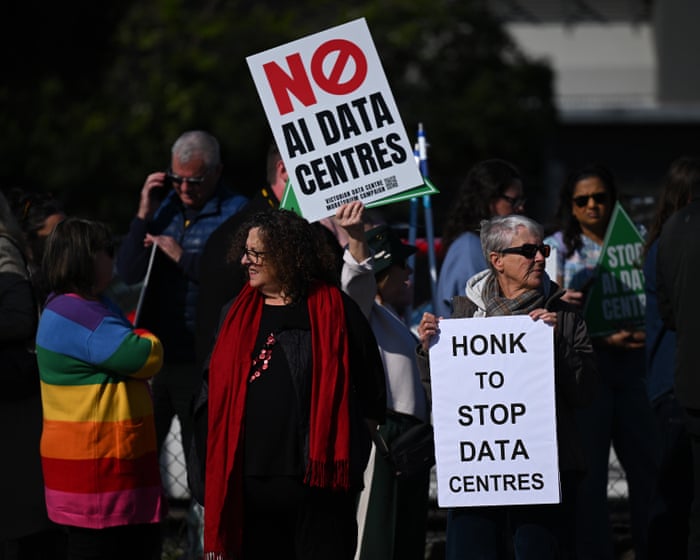
The vibe check down under
There is a major debate going down in Australia right now, and honestly, it is giving 'imported drama.' As the country sees a spike in AI datacentre construction, local communities are pushing back hard. We are talking protests, government inquiries, and serious calls for a construction moratorium. But if you ask the folks in power, this anti-datacentre energy is basically a TikTok-fueled import from the US.
The 'not like the US' defense
Pro-datacentre officials and industry leaders are pushing back against the narrative that these facilities are the villains. Belinda Dennett, head of Data Centres Australia, pointed out that the US has around 5,400 datacentres with massive capacity, while Australia is sitting at a much smaller scale with 252. The argument here is simple: Australians are reading US-based headlines about energy vampires and water hogs, then applying that logic to a local market that is much more regulated and smaller in scope.
Former Victorian minister for economic growth, Steve Dimopoulos, pretty much summed it up, noting that US-based campaigns have a way of landing on our screens and making us think, 'Wait, is this happening in my backyard?' He emphasized that Australia’s regulatory systems are different, and the panic is lowkey overblown.
Why the heat is rising
Real talk, though: the concern isn't completely out of nowhere. Projects like a massive 2.4 gigawatt site in outer Melbourne or a gas-powered one in the Northern Territory have folks stressed. Digital policy expert Rob Nicholls from the University of Sydney notes that people are rightfully worried about how these power-hungry hubs might impact their utility bills. Even the federal assistant minister for technology, Andrew Charlton, acknowledged that because many of these companies—like Microsoft and Amazon—are foreign-owned, Aussies are skeptical about whether the economic benefits actually stay in the country or just flow offshore.
Why it matters
The Australian government is now trying to get ahead of it by drafting new rules, including potential bans on gas-powered centres and requirements for developers to bring in their own renewable energy. As Charlton put it, Australia risks becoming a host for foreign tech without capturing the real value of the AI boom. It's a classic case of balancing the thirst for high-tech infrastructure with the need to keep the local economy from getting played.