The rotation is heating up
Is the altseason we’ve been waiting for actually here, or is the market just teasing us? While the official index sits at 64 out of 100—just shy of the 75-point threshold needed for an "official" altseason—the numbers are getting hard to ignore. Over the last 30 days, we’ve seen some massive moves, with memecoin launchpad PONS jumping 350% and AI-focused NEAR rallying 180%.
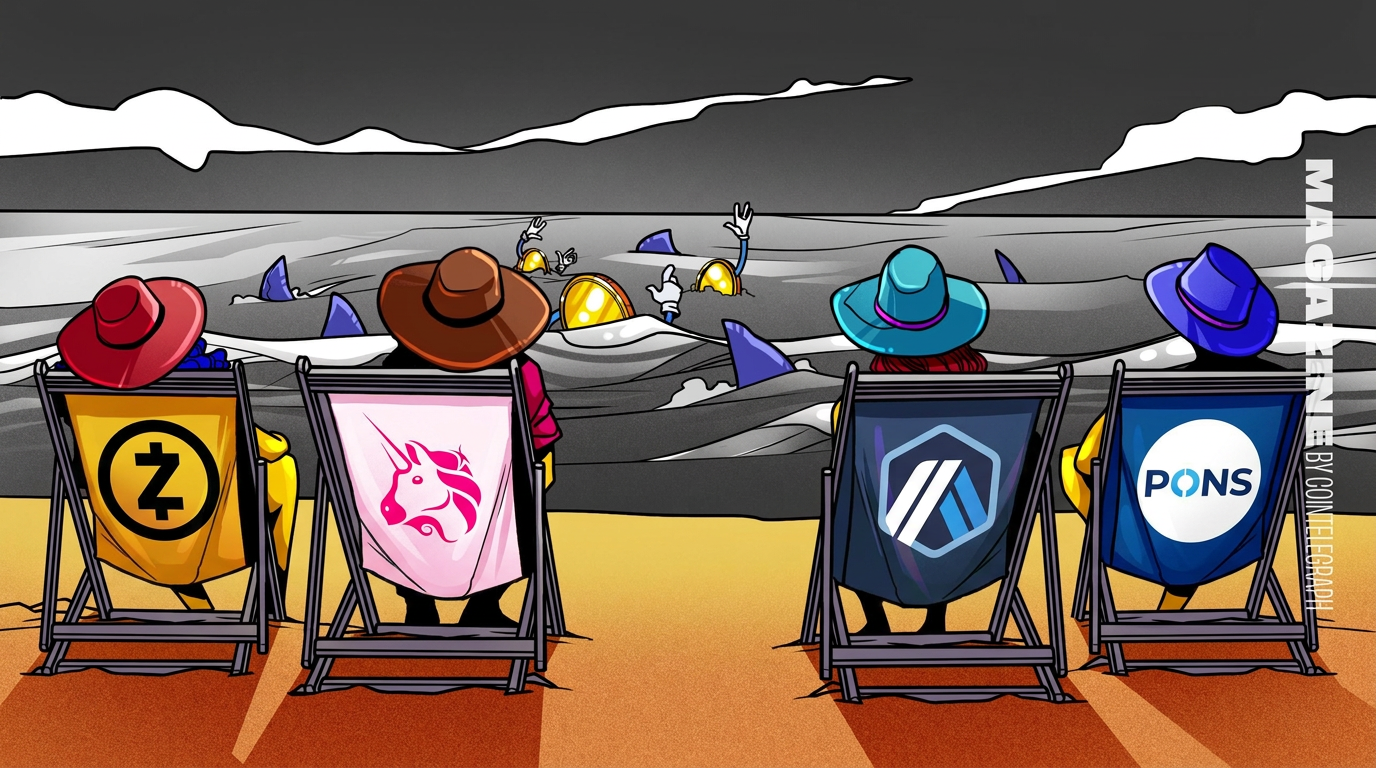
But here’s the plot twist: unlike past cycles where everything pumped blindly, the energy feels different. Analysts are noting that capital is clustering around protocols that actually generate revenue, like Uniswap (UNI) and Arbitrum (ARB). As Bankless podcast host David Hoffman put it, these tokens have a common thread: "They make money, they all print revenue."
Breadth before depth
Don’t get it twisted—memecoins aren't dead. 1inch co-founder Sergej Kunz noted that memecoins are still seeing the strongest growth among retail buyers. He describes the current market as "breadth before depth," meaning wallets are buying a wider variety of tokens, but in smaller, more cautious amounts.
Data from trading firm Talos confirms this shift in behavior. Samar Sen, head of international markets at Talos, pointed out that the top 10 altcoins now account for 80% of the total market cap, compared to 70% back in 2024. It’s not a total move away from speculation, but rather a "jumble of competing narratives" where DeFi, privacy tokens (like Zcash), and AI projects are fighting for main character energy against the usual memecoin chaos.
A new kind of liquidity
Perhaps the most interesting change this cycle is who is doing the buying. Dealer participation in altcoin trading has dropped from 65% in 2024 to about 32% this September. Instead, retail access is easier than ever thanks to mainstream platforms integrating crypto tools, while professional traders are leaning on high-tech wallet tracking to sniff out where the smart money is moving on-chain.
Curve Finance founder Michael Egorov believes the real driver could be the integration of crypto infrastructure into the actual economy, like using stablecoins for fintech applications. If that utility scales, it could change the game—but for now, it's a big "if."
Why it matters
Real talk: the market is maturing, and traders are getting more discerning, but crypto is still crypto. While the data suggests more focus on revenue-generating protocols, the sector is still prone to extreme volatility. Always do your own research (DYOR)—nothing here is financial advice, and just because the charts look juicy doesn't mean your bags are safe.